
I’m 49. Here’s what finally helped my midlife digestion.
For two years I told myself the heaviness was just my life now. It wasn’t — and the fix was smaller than I expected.

I’m 49, and for about two years I quietly told myself that feeling heavy after dinner was just… my life now. Bloated by mid-afternoon for no real reason. Meals I’d eaten happily for decades suddenly sitting like a brick. I blamed the wine, the late dinners, the stress, “getting older” — anything but the actual reason.
What got to me wasn’t even the discomfort. It was that nobody had warned me this was coming. I’d braced for hot flashes, maybe. Not for my own stomach turning into a stranger.

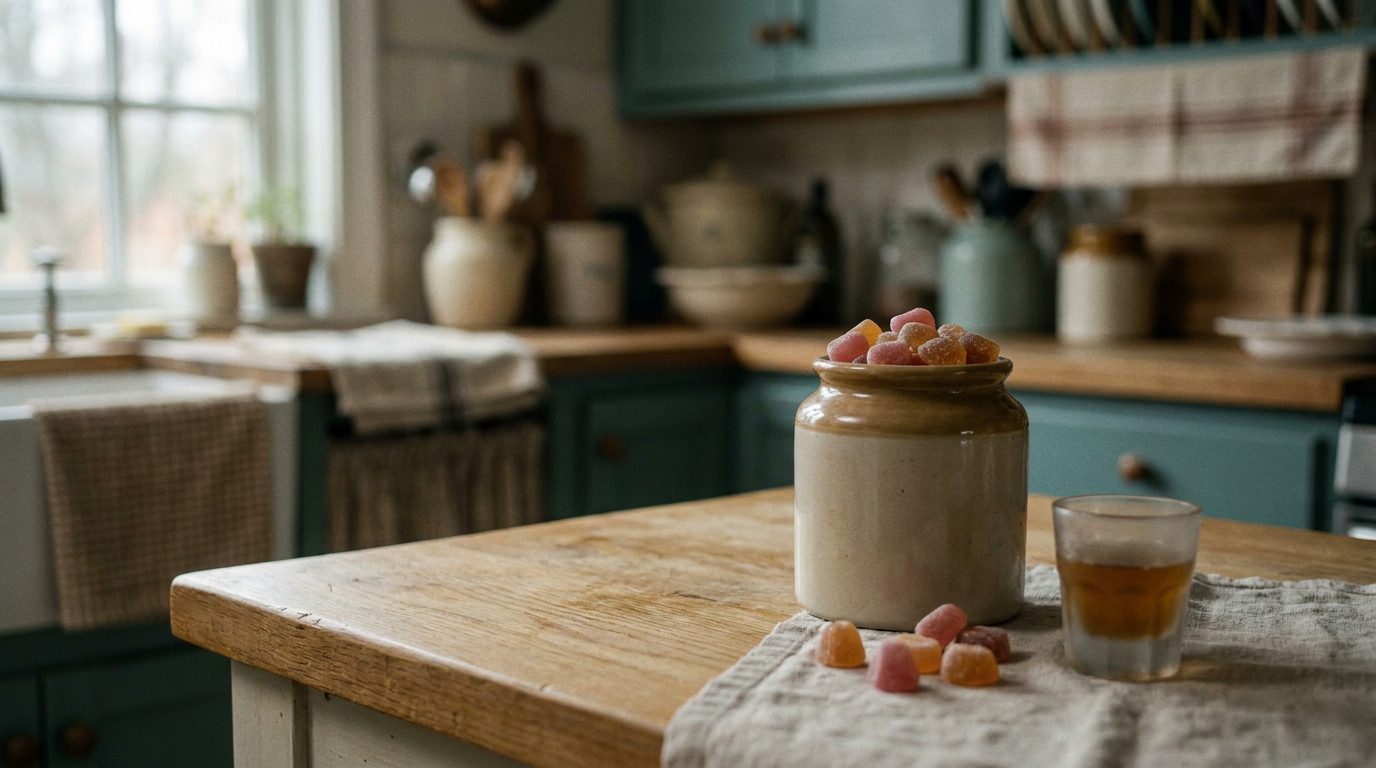
So I did what most of us do: I started subtracting. Cut the bread, then the dairy, then the raw veg. My plate got smaller and sadder, and I still felt heavy. Then I tried the ACV everyone raves about — the gummies tasted like candy (which felt counterproductive), and the liquid shots were so harsh I quit in four days.
Eventually I got curious instead of frustrated, and read up on what actually happens to digestion in your 40s. It was a relief, honestly. Turns out your body makes fewer digestive enzymes as you age, so food breaks down less efficiently. Things move a little slower. The balance of bacteria in your gut shifts. None of it was me doing something wrong — it was my body adapting, and it responds to daily support, not another food I’m not allowed to eat.
What changes in your 40s (and why it isn’t your fault)
- You make fewer digestive enzymes — food breaks down less efficiently.
- Things move a little slower through the gut.
- The balance of gut bacteria shifts with age.
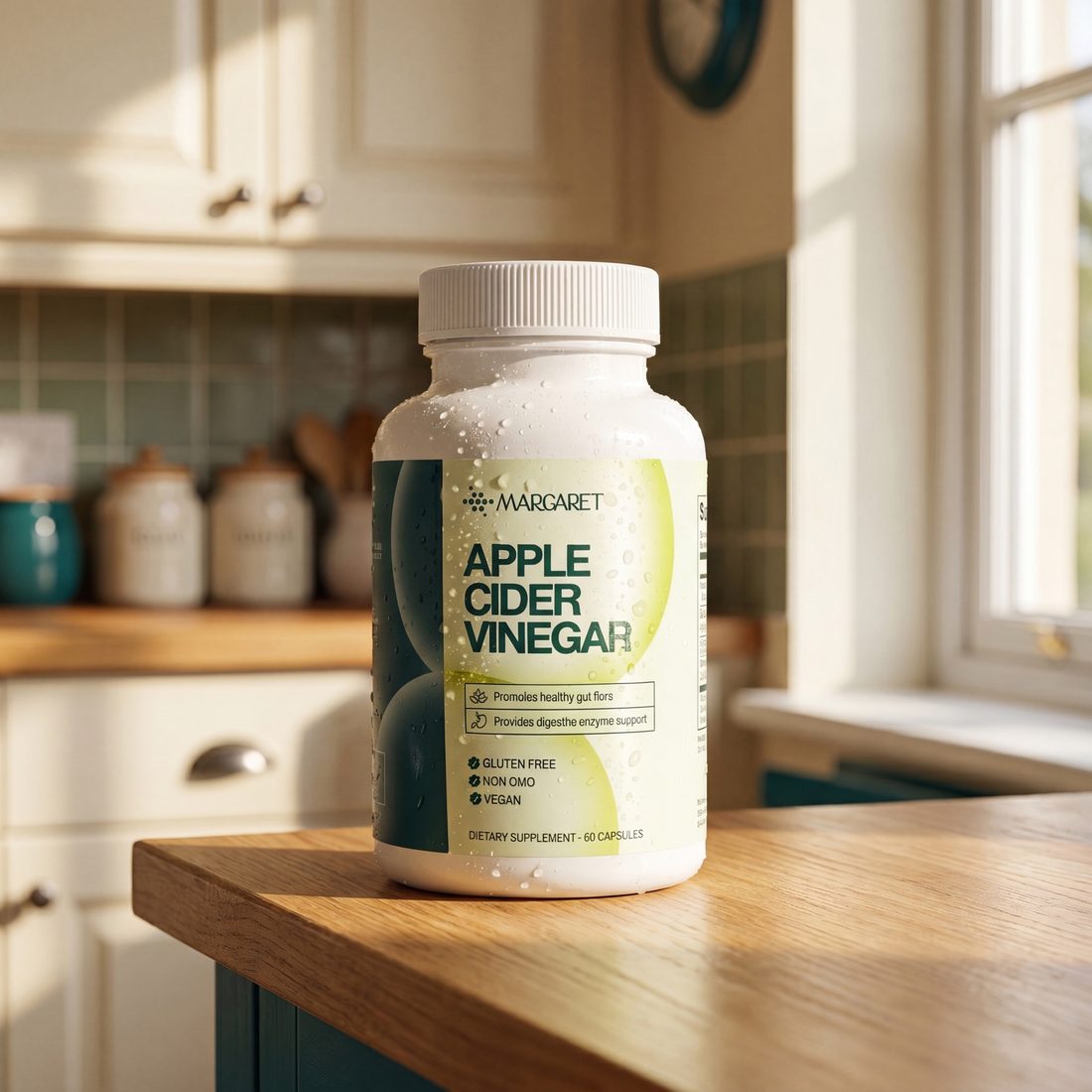
That reframe is what led me to Margaret. It’s one small capsule I take with water every morning — apple cider vinegar (without the shot or the sugar), plus a probiotic, prebiotic fiber, and digestive enzymes. Basically the four things my gut was finding harder, in one habit I couldn’t forget.

I’ll be honest: it wasn’t overnight. Around the third week I noticed I’d stopped thinking about my stomach after lunch. That was the whole thing — not a dramatic before-and-after, just lighter, and my plate back to normal.
If you’re where I was — quietly accepting the heaviness — I’d just say: it’s common, there’s a reason, and you don’t have to keep shrinking your meals.
A small daily habit did more for me than two years of subtracting. If you’ve been subtracting too, maybe it’s time to add one small thing back.
What’s actually in Margaret
- Apple cider vinegar — the benefit, without the sugary gummy or the harsh shot
- Probiotic — for the balance that shifts with age
- Prebiotic fiber — to feed it
- Digestive enzymes — for the breakdown your body finds harder
One small capsule. Once a day, with water. No sugar, no shot.
Subscribe & Save 20% · 60-day money-back guarantee.